| Tableware Type | Material | Best For | Key Advantage | Things to Consider |
|
Ceramic Dinnerware Sets |
Ceramic | Everyday dining and entertaining | Durable, versatile and available in varied designs | Can be heavier than some alternatives |
|
Porcelain Dinnerware |
Porcelain | Formal dining and premium use | Lightweight, refined and highly durable | Usually more expensive |
|
Ash-Free Bone China |
Bone china | Fine dining and special occasions | Very lightweight and translucent | Requires more careful handling |
|
Glass Tableware |
Glass | Contemporary dining and serving | Clean, versatile appearance | Can chip or break more easily |
|
Melamine Tableware |
Resin-based | Outdoor and casual dining | Lightweight and impact-resistant | Not ideal for high-temperature use |
|
Stoneware |
Dense clay | Rustic and everyday dining | Strong, substantial feel | Generally heavier |
We spend a lot of our time thinking about plates. Probably more than is normal. So when people ask us why we work almost exclusively in ceramic, we get it, it's a fair question, and the honest answer is longer than "because it looks nice."
Here's the thing nobody tells you when you're shopping for dining sets: you don't really find out if a set is good until you've lived with it. Until it's been through a hundred dishwasher cycles, stacked a little carelessly after a dinner party, used for a rushed weeknight bowl of pasta and then, three days later, a table you actually dressed up for. That's the real test. And it's the test we design around.
So let's walk through how we think about ceramic dinnerware sets, how it compares to the alternatives, and what we'd actually tell you to look for, whether you buy from us or not.
Why We Build Ceramic Dinnerware Sets
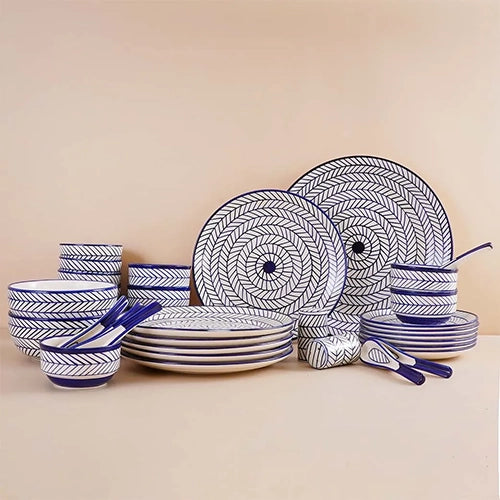
Ceramic is forgiving in a way a lot of materials aren't. It can be shaped into dinner plates, bowls, platters, serving pieces, practically anything, while still holding onto real durability. That combination is rarer than it should be. A lot of dinnerware makes you choose between "survives daily life" and "actually looks considered." We don't think you should have to pick.
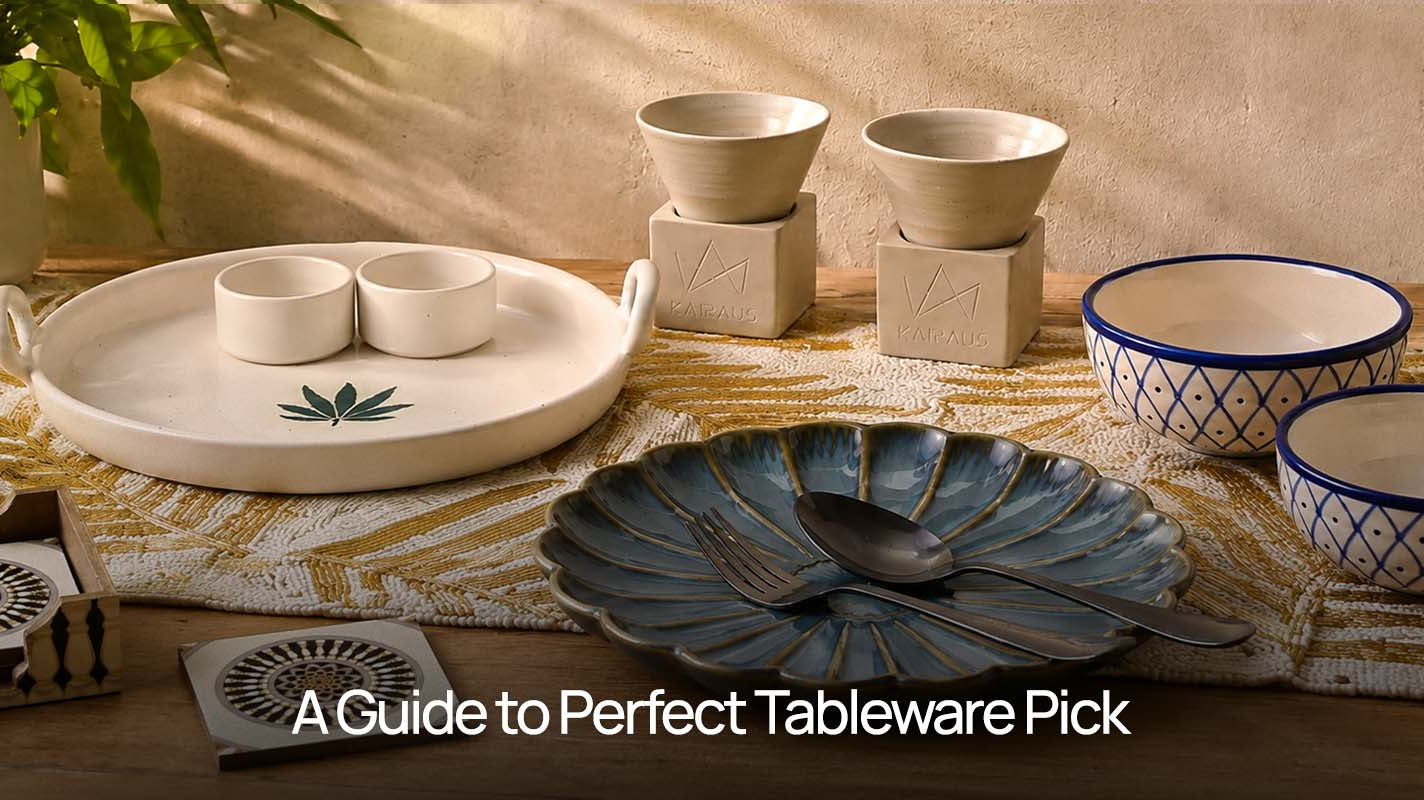
When we design a set, we're thinking about the whole table working together with plates, bowls, and serving pieces that share a visual language, so nothing looks like it wandered in from a different collection. That's what a proper ceramic dinner set should do: hold its own on a Tuesday and still look right when you've got people over.
Ceramic vs. Porcelain: What to Choose for Dinner Sets
This comes down to how the two are made, not which one is "better." Porcelain premium serveware is fired at a higher temperature, which gives it a denser, thinner, more refined body. It's lighter in the hand and resists staining a bit better, there's a reason it reads as more formal.
Ceramic, fired at a lower temperature, holds onto more texture and character. It has more presence on the table, more range in finish, and when it's made properly, which is where we spend most of our effort, it's every bit as durable for daily use.
We lean into ceramic dinnerware set because we'd rather make something with a bit of substance and personality than something that just looks fine in a photo. But we won't pretend porcelain doesn't have its place, if you want something lighter and more formal, it's a legitimate choice, just not the one we make.
What About Bone China Dinnerware Sets?
Bone chin tea cup sets are genuinely beautiful- thin, smooth, faintly translucent when you hold it to the light. It's the material people picture when they hear "fine china." But it also demands a certain kind of care that most everyday tables don't really allow for. You don't stack it carelessly. You think twice before handing it to a kid.
We build for tables that get used, not just admired, which is a big part of why our focus stays on ceramic. It's sturdier, more adaptable, and we'd argue, more interesting to design with, given how much more range ceramic allows in shape and finish.
Though, if you are looking for something occasional, than going Kairaus’ 24k pure gold collection- imperial gold.
Ceramic vs Glass Tableware: What Should You Choose?
Glass and ceramic create very different dining experiences.
Glass tableware has a visually light and transparent quality. It works particularly well for modern settings, desserts, salads and certain serving applications. Ceramic has a more tactile presence. Its opaque surface provides a strong backdrop for food, while different glazes and finishes can introduce depth and character to the table.
For a warmer, more grounded dining aesthetic, ceramic dinnerware set is often the natural choice.
Are Ceramic Plates and Serving Bowls Suitable for Everyday Use?
Yes, quality ceramic plates and ceramic bowls can be excellent for everyday dining.
However, durability depends on more than the word "ceramic" on the label. The clay body, firing temperature, glaze quality and manufacturing process all influence how well tableware performs over time.
When choosing ceramic dinner set, consider:
A good ceramic dinner set should balance aesthetics with practical performance.
1. Material Quality
Look beyond the finish. The underlying ceramic body determines much of the product's strength and longevity.
2. Glaze Quality
A well-applied glaze creates a smooth, hygienic surface and contributes to the overall appearance of the piece.
3. Practicality
Check whether the pieces are dishwasher- and microwave-safe if these features are important to your routine.
4. Weight
Tableware should feel substantial without becoming uncomfortable to lift, carry or stack.
5. Design Consistency
When purchasing dining sets, look for coordinated shapes, proportions and finishes across plates, bowls and serving pieces.
6. Intended Use
Everyday dining may require different characteristics from tableware intended primarily for formal entertaining.
Final Note
Ceramic dinnerware sets occupy a useful middle ground between everyday practicality and considered design. They offer versatility across plates, bowls, platters and serving pieces while allowing considerable freedom in form and finish.
Porcelain, bone china, glass and stoneware each have their own advantages. The best choice ultimately depends on your priorities: durability, weight, appearance, maintenance, occasion and budget.
Rather than choosing luxury dinner sets simply because it looks beautiful, consider how it will feel in your hands, perform at your table and fit into the way you actually dine.
Frequently Asked Questions:
Are ceramic dinnerware sets durable?
Quality ceramic dinnerware can be highly durable, although performance varies according to the ceramic body, firing process and glaze quality.
What is the difference between porcelain and ceramic plates?
Porcelain is generally denser and more refined, while ceramic offers a broader range of textures, forms and finishes. Both can be suitable for everyday dining when well manufactured.
Are ceramic bowls good for everyday use?
Yes. Quality ceramic bowls are suitable for everyday meals and can be used for everything from breakfast and soups to desserts and side dishes, depending on their size and design.
How do I maintain ceramic dinnerware?
Follow the manufacturer's care instructions. If the pieces are dishwasher-safe, use the recommended dishwasher settings and avoid harsh handling that could cause chips or scratches.
What should a complete dinnerware set include?
A practical set may include dinner plates, side or snack plates, bowls and serving pieces such as platters. The exact combination should reflect how you normally serve meals.
Are premium serveware pieces necessary?
Not necessarily, but well-designed premium serveware can make shared dining easier and provide more flexibility when hosting guests.