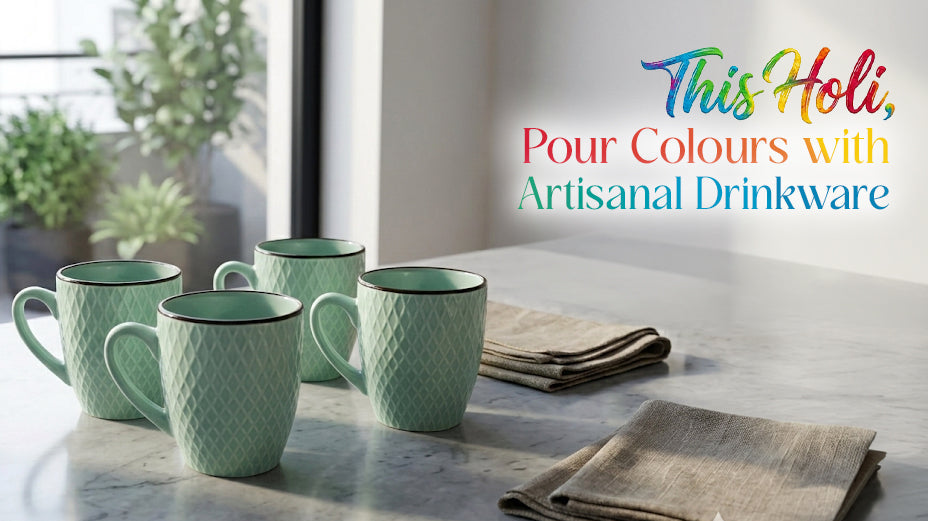
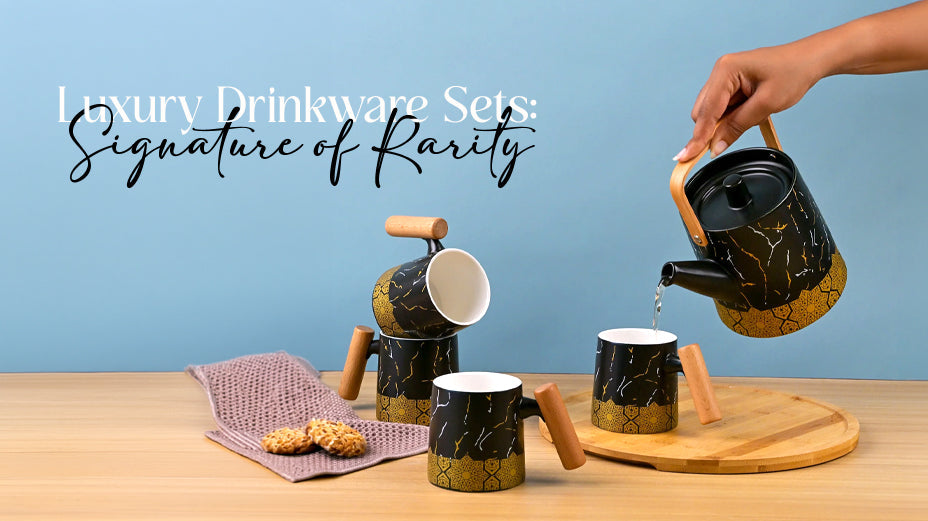
Tea is one of those rare things that almost every culture has claimed as its own. The leaves might travel the same route from garden to pot, but the cup that finally touches someone's lips looks nothing alike from one country to the next. But here is the truth that tea cup sets are never just a cup. It carries the manners, the pace of life, and even the weather of the place that made it. If you line up cups from ten different countries on a table, you could probably guess where each one came from just by its shape. That is the fun part of collecting or gifting a tea cup set. You are not just buying ceramic and glaze, you are borrowing a small piece of someone's ritual, a culture that was unknown for years and in a day you witnessed it, and somewhere every piece feels worth it.
In this blog, we are going to talk about these underdog souvenirs and the culture they hold. Read the blog and understand how luxury drinkware sets hold the stories around the world.
The Wide Rim, Shallow Tea Cup Set
How Does Britain's Slow Afternoon Look Like?

Draw a tea cup set in your mind that flares out wide at the top but doesn't sit very deep, resting neatly inside a matching saucer. What does it came as? Something elegant, but not unknown? Well, that silhouette belongs to the English afternoon tea tradition, born out of the 1840s habit of filling the gap between lunch and a late dinner with tea, sandwiches, and conversation.
The wide mouth was practical long before it was pretty. Tea used to be served scalding, and a broader surface let it cool faster while also showing off the pattern painted inside the bowl of the cup, which was considered half the point. The saucer wasn't decoration either. It caught drips, cradled biscuits, and gave ladies in gloves something steady to hold.
This is exactly why a cup and saucer set still shows up on wedding registries and anniversary gifts lists. It signals hospitality that takes its time.
Tall and Narrow Drinkware
How Do the cups of mint tea and strong coffee look?

Move somewhere in North Africa or the Middle East and cup shapes get taller and slimmer, built for tea poured from a height with theatrical flair, or for coffee so strong that a smaller cup makes more sense than a big one.
Moroccan tea cup saucer set are famous for being poured from far above the glass on purpose, creating a thin layer of foam on top. A tall, narrow shape keeps the tea from splashing everywhere during that little performance. But here is a twist, turkish coffee cups take the opposite approach for a different reason. The coffee is thick and intense, so the cup stays small and slightly tapered, meant for two or three unhurried sips rather than a full mug's worth.
But, if you understood, both cultures share something else too: pattern. Walk through a souk and you will see cups covered in mosaic-style prints, tiny repeating geometric shapes in jewel tones that echo the tilework found on mosque walls and courtyard floors.
And to be honest, a mosaic print on a modern tea cup is really a nod to centuries of tile artistry, shrunk down to fit in your palm.
The Conical Cup and Holder
What is Japan's Sencha Ritual?

There is another shape worth talking about, one that narrows at the base and flares outward toward the rim, almost like a small trumpet. This conical form is at the heart of the yunomi, the everyday teacup used across Japan for sencha and other green teas, distinct from the wider, handleless bowl used in the formal matcha ceremony.
Most yunomi skip the handle entirely, since the whole point is to wrap both hands around the cup and feel the warmth travel into your fingers, a small moment built into daily tea drinking rather than saved for a ceremony.
You will find the same conical logic borrowed into modern espresso cups and plenty of contemporary ceramic cups too, since a flared mouth does a good job of concentrating aroma no matter what is being poured inside. It's a shape that looks simple on a shelf but is doing a bit of work.
The Lidded Cup
What does China's unhurried Gongfu Tradition say?

In China, the gaiwan changed how an entire country drinks tea. It is a cup with a lid and sometimes a small saucer base, originally designed so the drinker could hold the lid slightly ajar, strain the leaves back with it, and sip straight from the cup without needing a separate strainer.
The lid does more than keep the tea hot. It traps the aroma so that lifting it releases a small wave of scent right before you drink, which is part of why gongfu tea ceremonies feel almost meditative. A cup with a lid and a small spoon tucked alongside it, a design you will also spot in dessert bowls and soup mugs today, traces its roots straight back to this idea of a vessel doing more than one job at once.
The Earthy Kulhads
What’s behind the India's roadside chai culture?

India tells a completely different story. Chai here isn't sipped slowly in a drawing room, it's grabbed on the way to work, poured from a kettle balanced on a bicycle, handed over in small kulhads that get tossed away after or in sturdy little glass tumblers that get rinsed and reused all day long.
A terracotta or ceramic kulhad works because chai is boiled, not steeped, thick with milk and sugar and spice, and it needs a shape that is easy to hold even when it's fresh off the stove and still too hot to touch with a bare palm. There's no saucer, no ceremony, just a fast exchange and a few minutes of standing around talking to whoever else is at the stall. It is one of the few tea rituals in the world built entirely around speed rather than slowness, and the tumbler shape reflects that completely.
Final Note
Are tea cups actually a culinary directory?
Once you notice these details, there is literally not going back. A wide rim with a saucer points to European tea customs. A tall narrow glass hints at Moroccan or Middle Eastern roots. Mosaic patterns echo tilework from hotter climates. A conical shape that flares at the rim carries a whiff of Japanese sencha tradition. A lid with a small spoon nods to Chinese sipping habits. A plain tumbler says everyday Indian chai.
It hands someone a small window into a tradition, whether that is a cup and saucer set for a housewarming or an ornate set for a wedding.
Kairaus brings many of these shapes and stories together in one collection, from wide rimmed saucer sets to tumblers and lidded cups. Explore the collection here and find the cup that matches your own story.
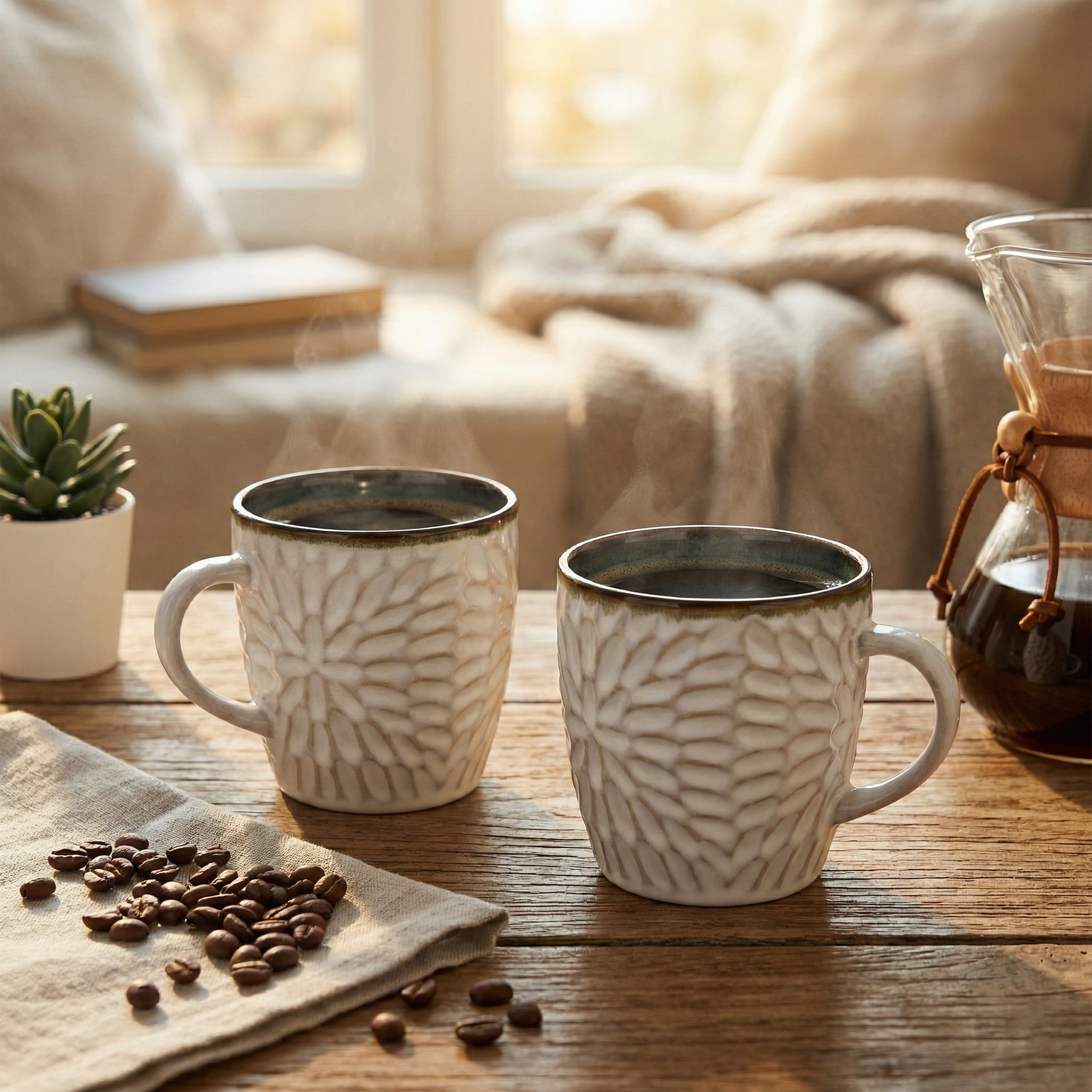
Frequently Asked Questions:
What is included in a typical tea cup set of 6?
Most sets include six matching cups, often paired with saucers, packed in a gift friendly box. Some sets add a matching teapot or tray for a complete serving experience.
Are ceramic cups better than glass for tea?
Ceramic holds heat longer and keeps tea warmer for a bit more time. Glass shows off color and clarity, so the better choice really depends on personal preference and occasion.
What makes a good housewarming gift besides cups?
A cup and saucer set is popular because it feels personal yet practical. Pair it with a small ceramic kettle or tray, and it instantly becomes a complete, thoughtful welcome home gift.
Where can I find unique gift worthy tea cup sets online?
You can browse Kairaus' cup and mug collection for wide rimmed saucer sets, tumblers, and lidded cups suited for gifting, weddings, or everyday home use.