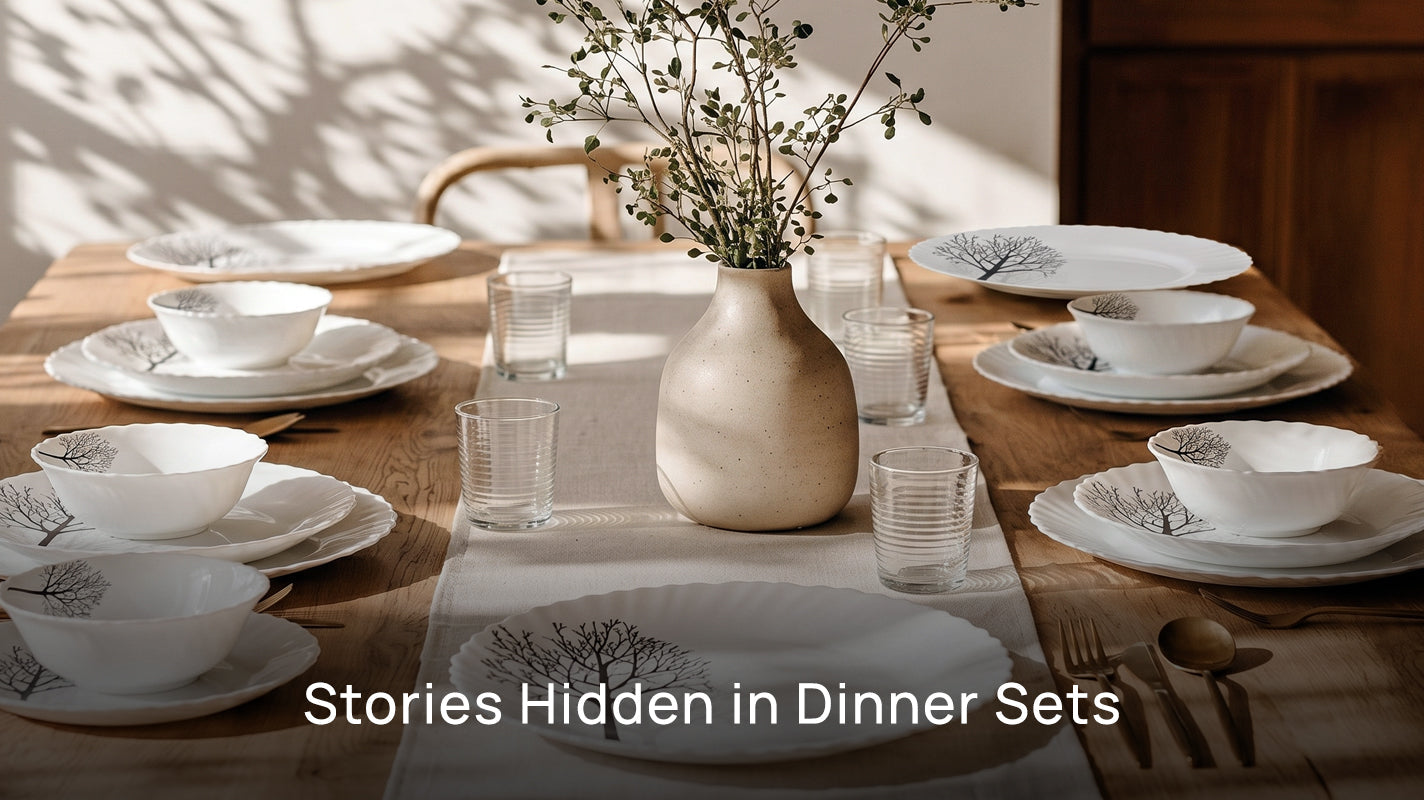
A lot of people own beautiful dining sets and still manage to make the table look like merely a makeshift or just an afterthought. You know, what disrupts the visual balance? The ceramic plates are stacked somewhere, the cutlery sets are tossed in a drawer, and the glassware only comes out when someone specifically asks for it. That gap between owning good things and actually using them well is exactly why we have created this blog for you.
You see, arranging a dining set is not complicated once you understand the logic behind it. All you have to understand it is that every piece has a position, a purpose, and a reason for being placed exactly where it goes. This discipline can turn your dining into a memorable experience.
In this blog, you are going to discover a new skill of hosting your next brunch or dinner with finesse and accurate arrangement that neither invites chaos and nor feels like a makeshift. Dive into the blog, now.
What Goes on a Formal or Fine Dining Setup?
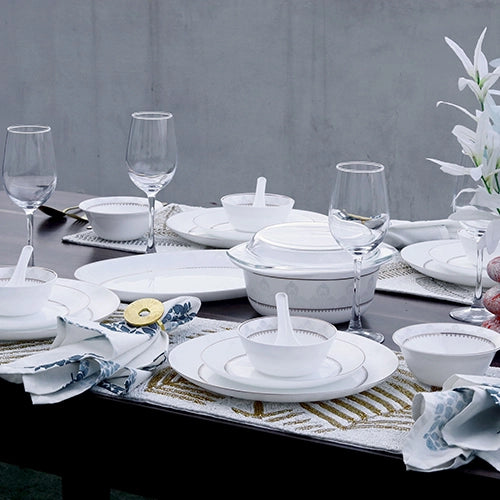
A complete dining setup includes ceramic dinnerware sets, cutlery sets, glassware, and a few additional serving pieces. The full list for a formal setting:
- Ceramic dinner plates or a charger (the centrepiece of each place setting)
- Ceramic bowls for soup or salad, placed on top of the dinner plate (before the main course arrives)
- Ceramic platters used as shared (serving pieces at the centre of the table)
- Cutlery sets arranged in order of use (around the plate)
- Drinking glasses and glassware positioned above and to the right
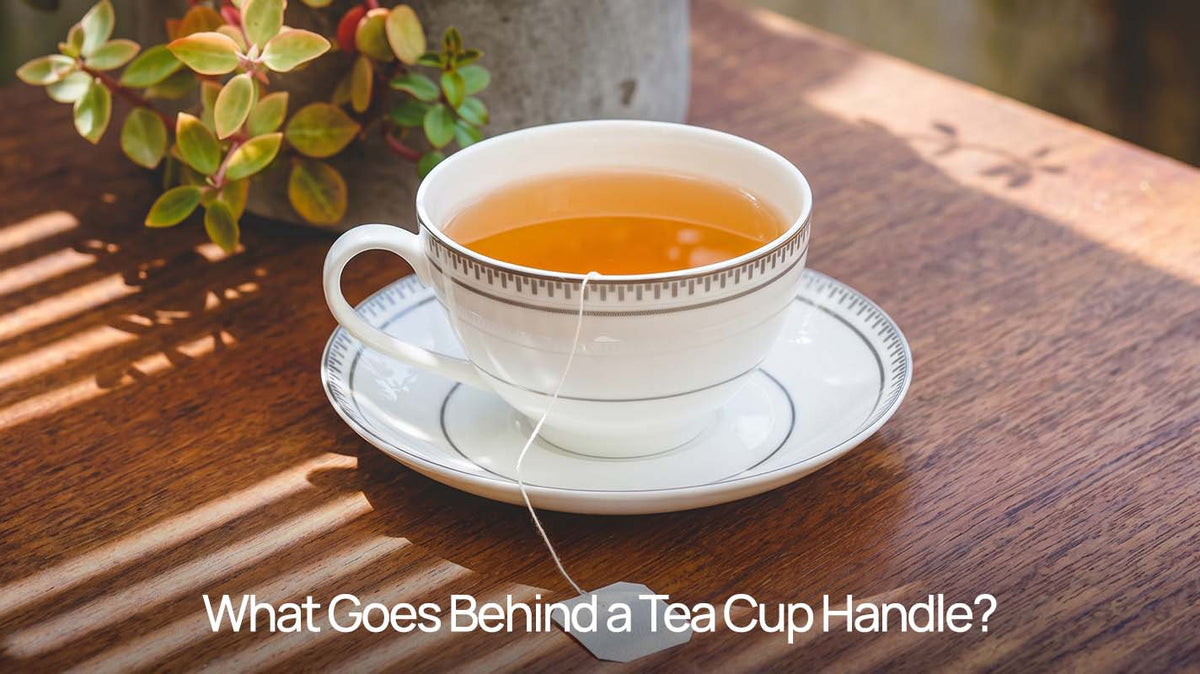
- Cup and saucer sets or tea cup sets brought in after dessert
- Wooden trays used to carry and present items like condiments, bread, or water bottles
For a casual dinner, you can drop the charger and the formal course-by-course layering. The placement logic still applies.
How to Place Cutlery Sets on a Dining Table

This is the question most people search for, and the answer is simpler than most etiquette guides make it sound.
The rule: Cutlery is placed in order of use, from the outside edge moving inward toward the plate. The first utensil you will use sits furthest from the plate.
Left side of the plate should only have forks:
- Outermost: salad fork or starter fork
- Closest to the plate: dinner fork
Right side of the plate reserved for knives and spoons:
- To right of the plate add dinner knife, blade always turned inward toward the plate
- Next will come the soup spoon
- Outermost right will have teaspoon, used for tea or coffee at the end of the meal
All handles should sit one inch from the table edge and align at the same horizontal baseline. That single detail makes a table look professionally set rather than casually assembled.
And above the plate? The dessert fork and dessert spoon is placed across the top of the plate. Where the spoon handle points right, the fork handle points left. Many hosts also prefer to bring these in with the dessert course rather than cluttering the original arrangement.
Where Do Drinking Glasses and Glassware Go?

Glassware is placed above the knife, in the upper right zone of the place setting. For a full formal setting with multiple glasses:
- Water goblet: closest to the plate, positioned directly above the knife
- Red wine glass: just to the right of the water goblet
- White wine glass: slightly to the right and behind the red wine glass, forming a gentle diagonal
For everyday meals, a single drinking glass above the knife is correct and sufficient. Crystal glassware, heavy-bottomed tumblers, or even a water bottle in a casual setting all follow the same placement logic.
How to Use Ceramic Bowls in a Dining Set Arrangement?

Ceramic bowls do not sit on the table at the start of a meal in a formal setting. They arrive with the course they belong to and are placed directly on top of the dinner plate. For a casual family dinner, pre-setting bowls on plates is completely appropriate and saves trips to the kitchen.
Matching ceramic bowls to the rest of the ceramic dinnerware sets pulls the table together visually. Mixed materials can work beautifully too, but the shapes should have some coherence like deep bowls next to angular plates creates tension that feels accidental rather than intentional.
Where Do Ceramic Platters and Serving Pieces Go?
Ceramic platters and other shared serving pieces go at the centre of the table, arranged with breathing room between them. Crowding the centre makes it difficult for guests to reach anything comfortably and turns a well-laid table into an obstacle course.
A practical centre arrangement for a dinner for six: one large ceramic platter for the main, a smaller serving dish for sides, a wooden trays for bread and condiments, and a water bottle or pitcher within easy reach of every guest. Keep the centrepiece, whether flowers or candles, low enough that people can see each other across the table.
What Is the Correct Way to Set a Cup and Saucer Set?
Cup and saucer sets, and tea cup sets specifically, come in at the end of the meal with tea or coffee rather than being set from the start. Place the saucer flat with the cup sitting in its well, handle pointing to the right at roughly the four o'clock position. The teaspoon rests on the saucer to the right of the cup, not inside it.
If you are serving tea to a large group buffet-style, wooden trays make excellent carriers for cups, saucers, and teaspoons arranged neatly together.
Common Mistakes to Avoid When Setting Dining Sets

Knife blades facing outward. The blade of every knife always turns inward toward the plate. This is one of the oldest and most consistently ignored rules in table setting.
Too many pieces for the meal. Only lay the cutlery you will actually use. A three-fork setup for a two-course dinner looks confused rather than formal.
Glassware too close to the plate. Glasses placed directly beside the plate get knocked over. Give them space in the upper right zone.
Mismatched sizes within ceramic dinnerware sets. Mixing a large dinner plate with a very small side plate from a different set reads as an accident. If you are mixing pieces intentionally, make it a clear choice, not a default.
Forgetting the water. A water glass or water bottle at every setting is non-negotiable, formal or casual.
Final Note
Your manifested fine dining arrangement follows just one logic: put things where people can reach them, in the order they will need them, without creating chaos out of anything. Ceramic plates centre the setting, cutlery sets frame it, glassware floats above the knife, and everything else serves the meal in place of adorning the table at a meal's cost.
Also, the secret sauce is - Get yourself timeless good pieces and place them with intention, that's all a dining table requires. At Kairaus, a design-first brand, you will find innovative and high-quality material dining accents that make your arrangement grand.
Frequently Asked Questions:
What is the difference between informal or formal dinner setting?
Informal settings use fewer pieces, simple flatware, and casual napkins, while formal dinners feature multiple courses, matching china, crystal, and precise utensil arrangements.
Which material dinnerware looks more elegant and beautiful?
Fine bone china or porcelain looks most elegant, thanks to its delicate translucency, smooth glaze, and refined weight compared to stoneware or earthenware.
Where can I find quality dinnerware?
You can find quality and elegant dinnerware made of high-quality porcelain and bone china at Kairaus, a design-led brand that brings in the balance of function and beauty together.
What are the 6 cutlery etiquette?
Work outside-in, rest utensils diagonally when pausing, cross them when finished, never gesture with cutlery, avoid noise, and hold correctly. For perfect placement you can also read our blog on cutlery etiquette.