You know the feeling when your walk into a room with a gorgeous sofa, flooring someone clearly agonized over, lighting that's exactly right. And yet something's off. Nothing is wrong, exactly. It just doesn't feel like anyone actually lives there.
Nine times out of ten, that's not a furniture problem. It's a missing layer problem.
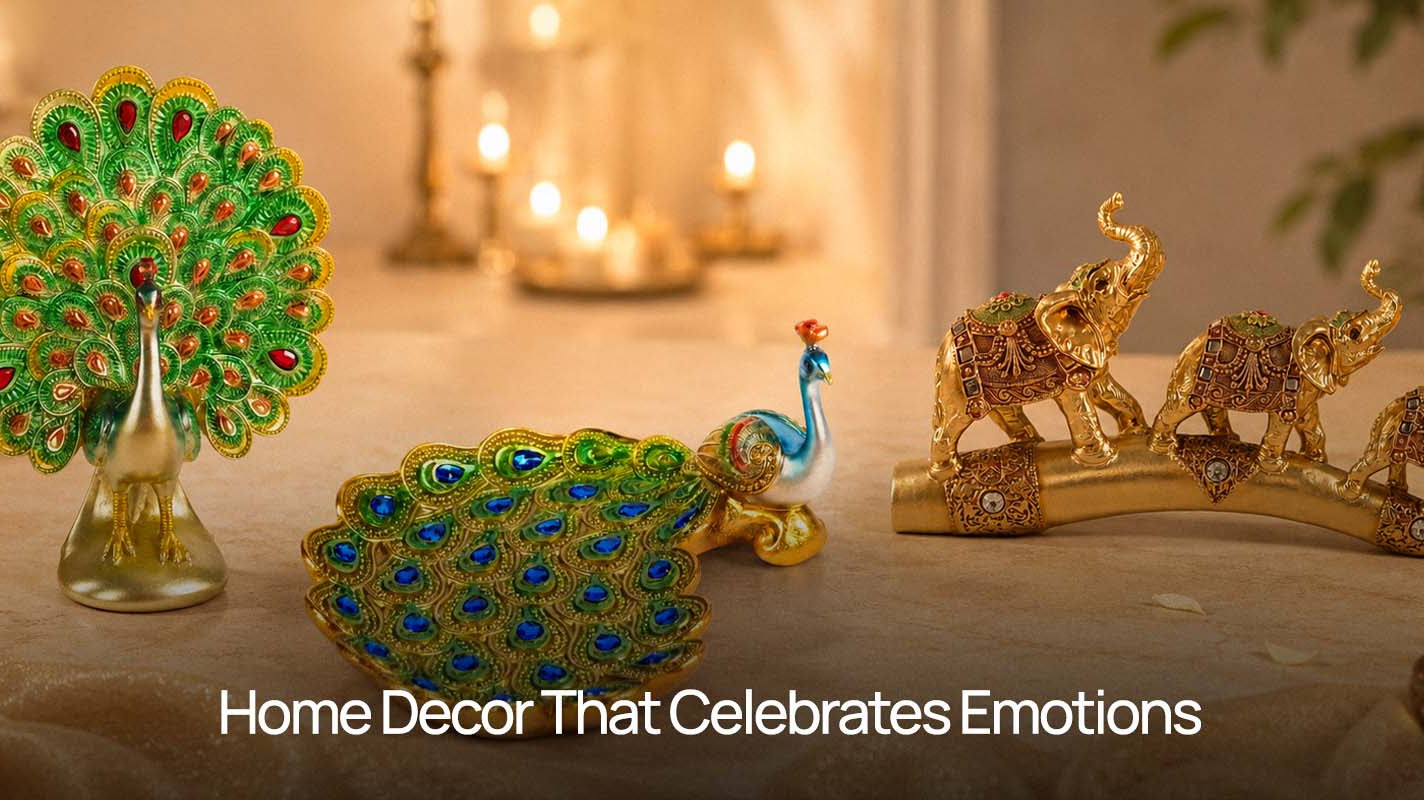
The layer of luxury home accents. The vase catching the late afternoon light. The sculpture sitting right where your eye wants to land. The one piece of wall decor that stops a blank wall from feeling like an afterthought.
These pieces rarely run the show. But without them, nothing else in the room quite makes sense either.
What Actually Counts as a Luxury Home Accent?
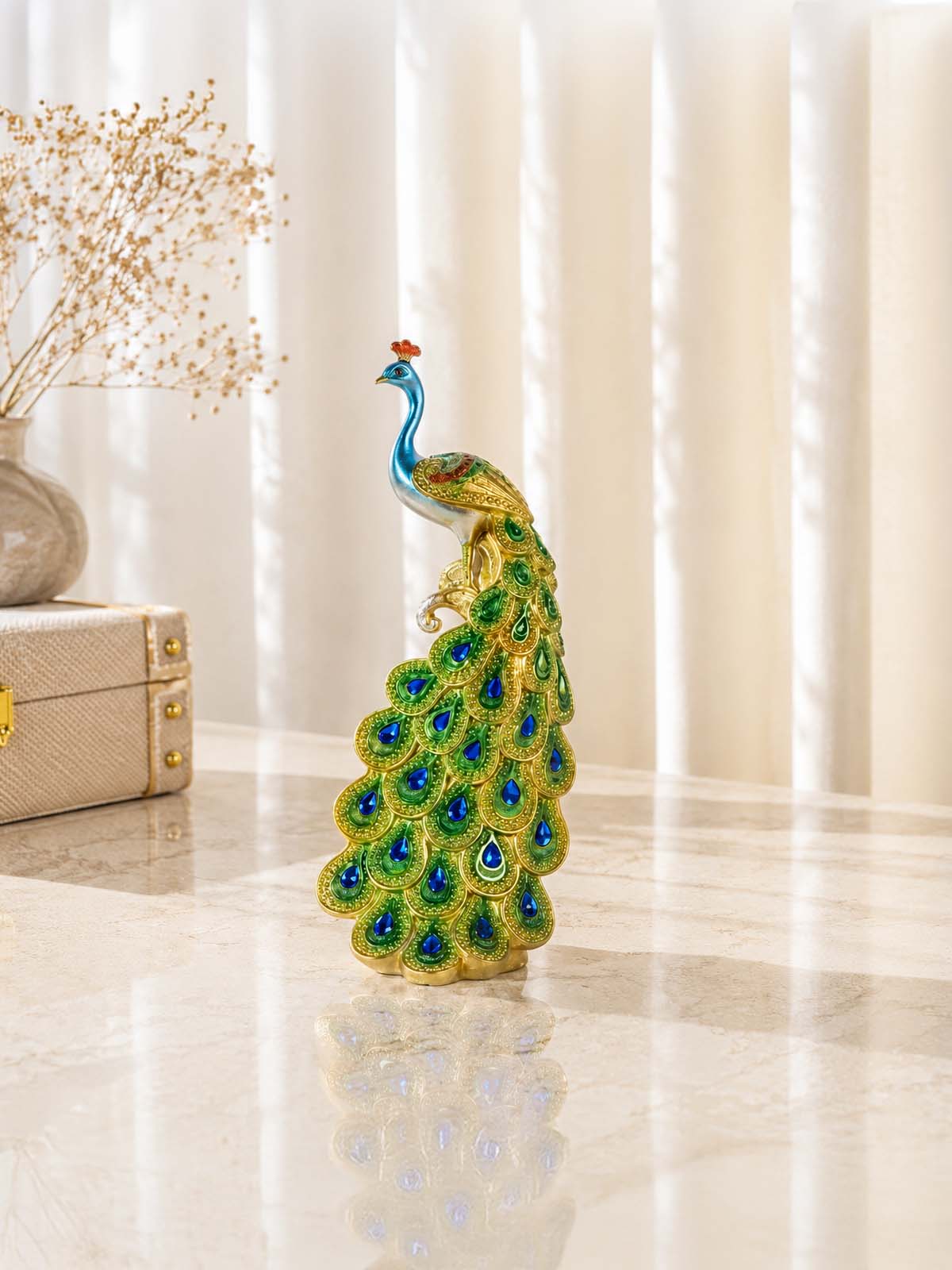
Luxury home accents are the decorative and functional home decor items chosen for how they look, feel, and behave in a space. Decorative vases, sculptures, wooden round trays, candle holders, wall decor, table decor, small artistic objects. That kind of thing.
But here's what people usually miss. Luxury isn't a price tag. It's a reason.
The difference between a "nice object" and a genuinely luxurious one comes down to why it's there and what it's doing for the room. A well chosen accent can add a texture the room was missing, soften something too sharp, create a focal point, or quietly tie two unrelated elements together. At that point it stops being decoration. It becomes part of the room's architecture.
Why Small Objects Do So Much Heavy Lifting?
Furniture builds the skeleton of a room. Home decor items give it a pulse.
Picture that same living room again. Great sofa, nice floors, lighting on point. Still feels a little generic, right? Now add one sculptural decorative vases on the console, one considered object on the side table, and a single piece of art on the wall that had been sitting empty.
Suddenly the room has something to say.
This is one of the more fascinating truths of interior design. Objects talk without saying a word. They hint at taste, travel, memory, even the tempo a home is meant to be lived at. It's also why the best interiors almost never look like they were bought in one trip. They look like they were gathered, over time, on purpose.

The In-Between Layer Nobody Names
Design conversations tend to orbit the big stuff: architecture, furniture, lighting, color, materials. Decorative objects live in the gap between all of that.
They're small enough to rearrange on a Sunday afternoon, yet powerful enough to shift how an entire room reads. The architecture doesn't move an inch, but swap out a handful of objects and the atmosphere changes completely.
That's the forgotten layer, and it's exactly where personal taste gets to speak loudest.
A dining table can be beautifully built, but the objects on top decide whether dinner feels formal, festive, or lazy Sunday relaxed. A console can be architecturally perfect and still feel hollow without the right piece sitting on it. A shelf can be flawlessly built in and still look like an afterthought without a considered arrangement on top of it.
Scale: The First Thing Designers Actually Look At
Before color, before material, professional designers ask one question: does this home decor item make sense next to everything around it?
A tiny object gets swallowed by a large console. An oversized piece bullies a delicate side table. The goal was never to make every object shout for attention. It's to make the relationship between them feel deliberate.
Sometimes that means one large decorative vase, standing alone, doing all the talking. Other times it's a small cluster of objects at different heights, spaced out enough to actually breathe. Filling every inch of a surface almost never looks luxurious. It just looks busy.
The empty space around an luxury home accent is doing just as much design work as the object itself.

Material Is Where Luxury Gets Felt, Not Just Seen
Luxury isn't only visual. It's tactile, even when you're not touching anything.
The cool weight of ceramic vases. The heft of poly-resin figurines. The way glassware lets light pass straight through it. The grain running through wood. The give of a textile.
Mix these thoughtfully and a room gains sensory depth almost instantly. Set something polished next to something textured. Place a translucent object against a solid, matte backdrop. That contrast does more visual work than another round of color or ornament ever could, which matters most in refined interiors, where restraint tends to outperform abundance.
What to Actually Do With an Empty Wall
An honest answer first: an empty wall isn't automatically an unfinished one. Sometimes restraint is the entire point, and a quiet wall is exactly what a busy room needs.
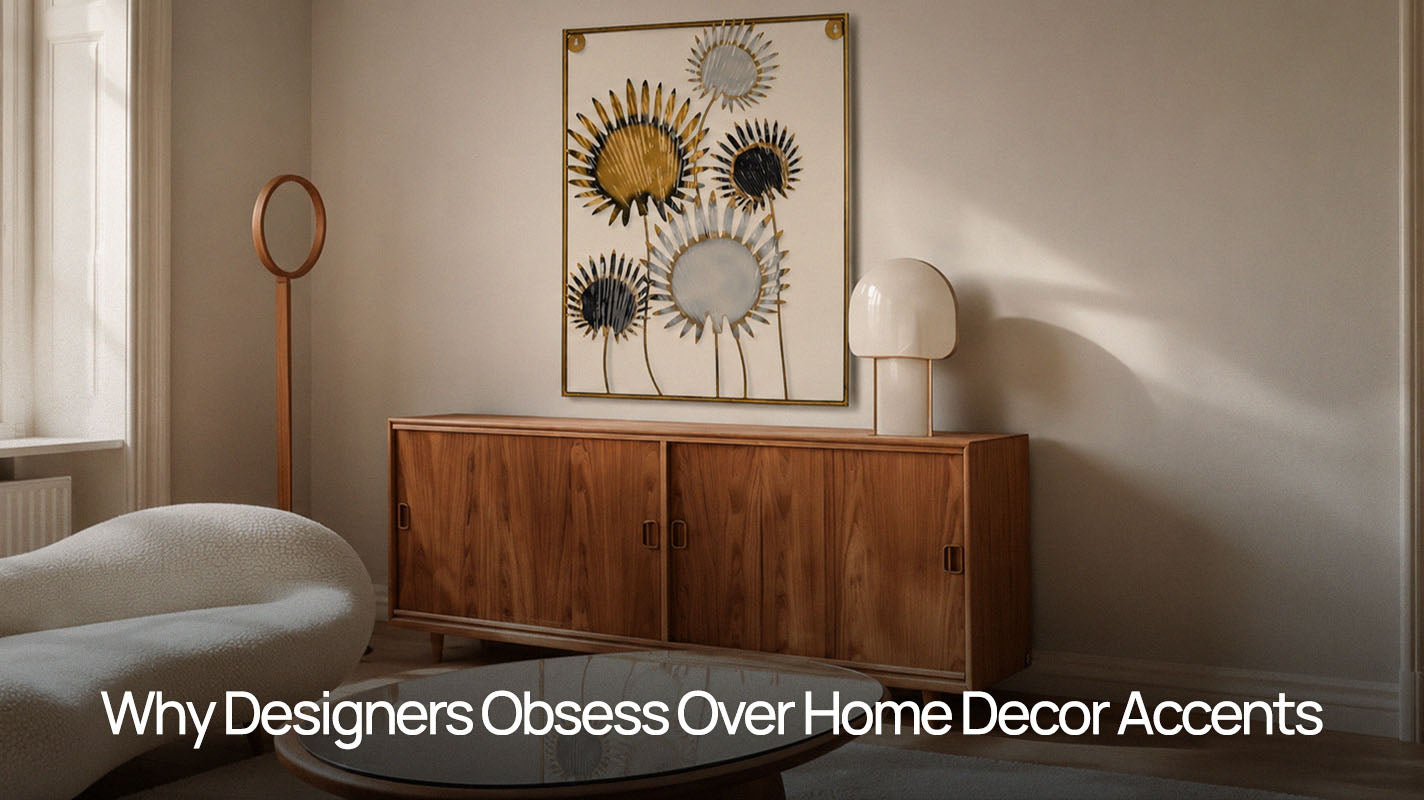
But when a wall genuinely feels off balance, when your eye keeps drifting there looking for something, that's when wall decor earns its place. It can add scale, movement, texture, or simply give the eye somewhere to land.
The real question isn't "what could go here?" It's:
"What does this wall actually need?"
Sometimes that's a large, commanding artwork. Sometimes it's a sculptural wall piece that adds dimension instead of flatness. Sometimes it's a small, arrangement that just breaks up the monotony without trying to out shout the architecture around it. The best wall decor is in conversation with the room, never shouting over it.

Table Decor Is Where Design Gets Personal
If you want proof of how much accents matter, look at a dining table.
The table gives you the structure. What you put on it creates the occasion.
A weeknight dinner might call for almost nothing, one small object, maybe a single candle. A celebration invites more layers: candleholders, decorative figurines, a centerpiece, serving pieces, something sculptural in the middle of it all.
Same underlying rule either way:
Don't decorate the table. Compose it.
Height, spacing, repetition, texture, visual weight. All of it shapes how the table feels before anyone even sits down. And the best table decor never gets in the way of actual conversation or actual dinner. It sets a mood, then quietly steps back and lets people use the table for what it's for.
The Real Luxury Move Is Restraint
There's a persistent myth that luxurious rooms need more. More shine, more ornament, more objects, more expensive materials stacked on top of each other.
The opposite is usually true.
Curation beats quantity, almost every time.
One genuinely exceptional object, placed with intention, will outperform ten pieces all competing for the same five square feet of console space. That's the whole argument for curation: enough home decor products to feel personal and collected, and enough restraint to let each piece actually be seen.
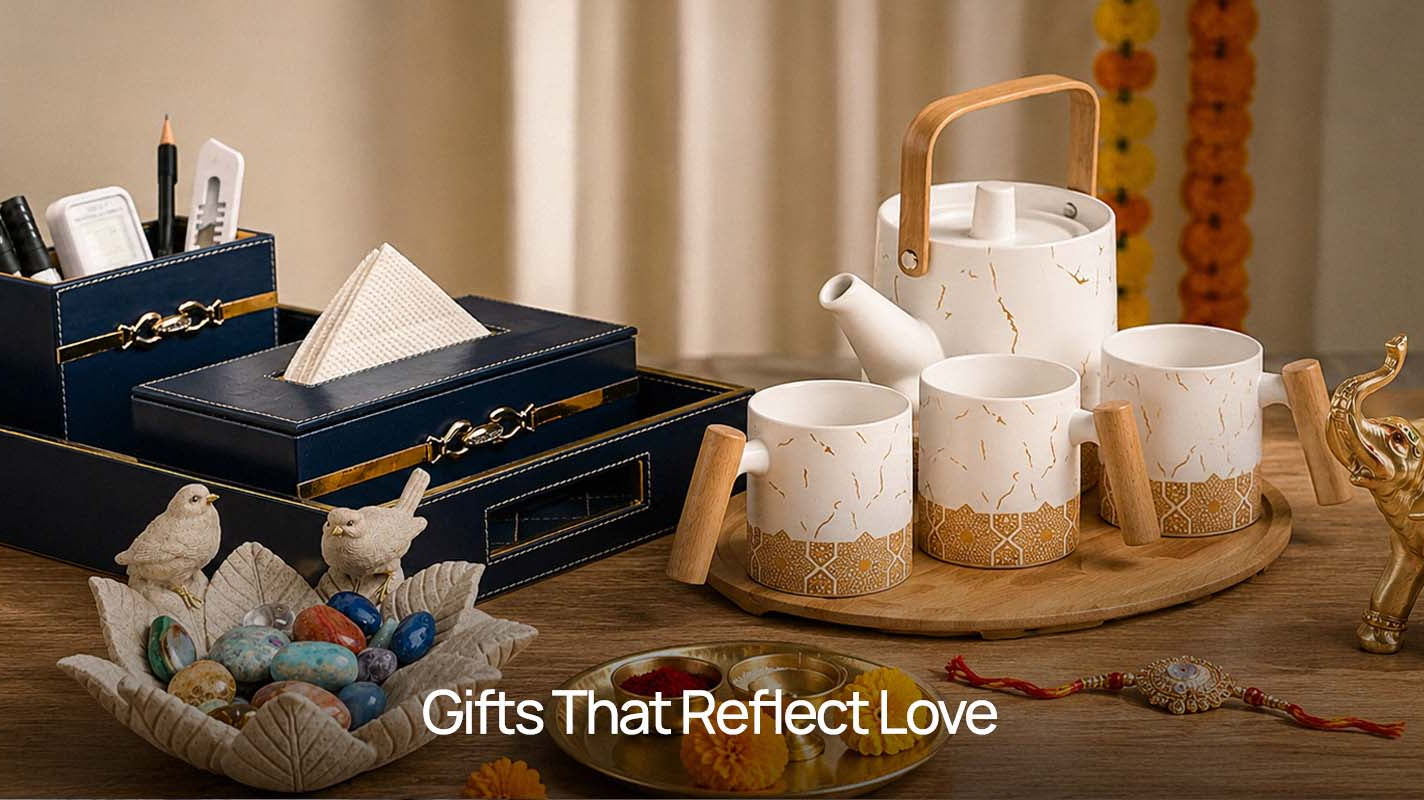
And the plus point? Such luxury home accents are not just perfect for home decor but also to reflect love to our beloved ones through unique gifts.

Final Note
The most striking interiors are almost never built around one showstopping object. They're built around relationships. Between furniture and architecture, light and material, color and texture, an object and the empty space around it.
Luxury home accents are part of that conversation, whether they get credit for it or not. They're the details that soften a room, give it rhythm, and make a carefully designed space feel unmistakably human instead of staged.
At Kairaus, that's the whole idea behind the collection. Objects made for living in, not just filling space. From decorative vases to accents built to sit naturally into everyday life, you can explore the full range through Kairaus Home Decor.
Frequently Asked Questions
What are luxury home accents?
Luxury home accents are decorative or functional objects, vases, sculptures, wall decor, table decor, trays, figurines, chosen for their design, craftsmanship, material, and how well they work within a room, not just how much they cost.
What actually makes a home accent feel luxurious?
Not the price. Material quality, craftsmanship, proportion, finish, originality, and thoughtful placement all matter more. Restraint matters just as much. A well placed single object often reads as more luxurious than a crowded shelf.
How do you style decorative vases?
Pay attention to height, silhouette, and color relative to nearby furniture. A single statement vase can carry a whole console on its own. Smaller ones work better grouped, at varied heights. Flowers are optional. Many vases are striking as sculptural objects by themselves.
Can luxury home accents be practical too?
Yes, often the best ones are. Trays, candleholders, decorative containers, and tableware routinely do double duty, genuinely useful, and good looking enough to be part of the room's design.
What's the actual difference between home decor and home accents?
Home decor is the umbrella term for everything decorative in a space. Home accents are the specific objects, vases, wall decor, table decor, used to add character, texture, color, or personality within that bigger picture.