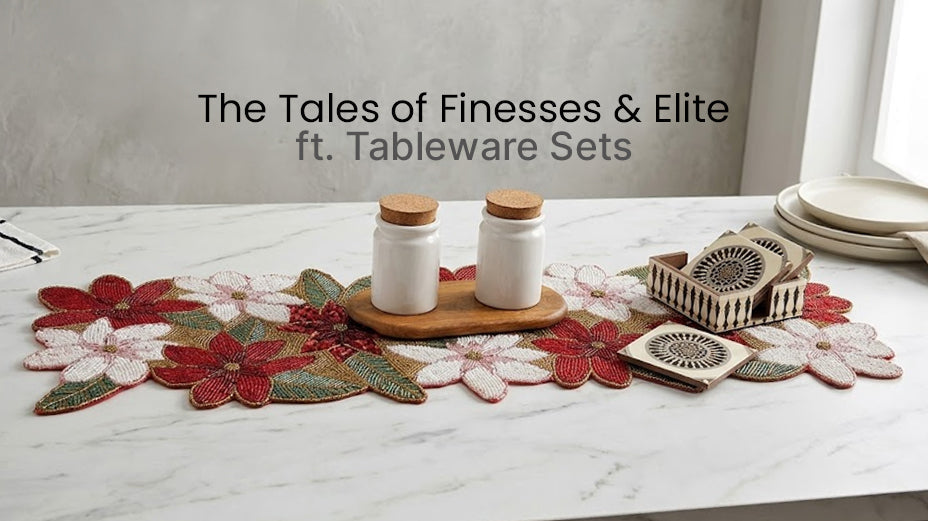
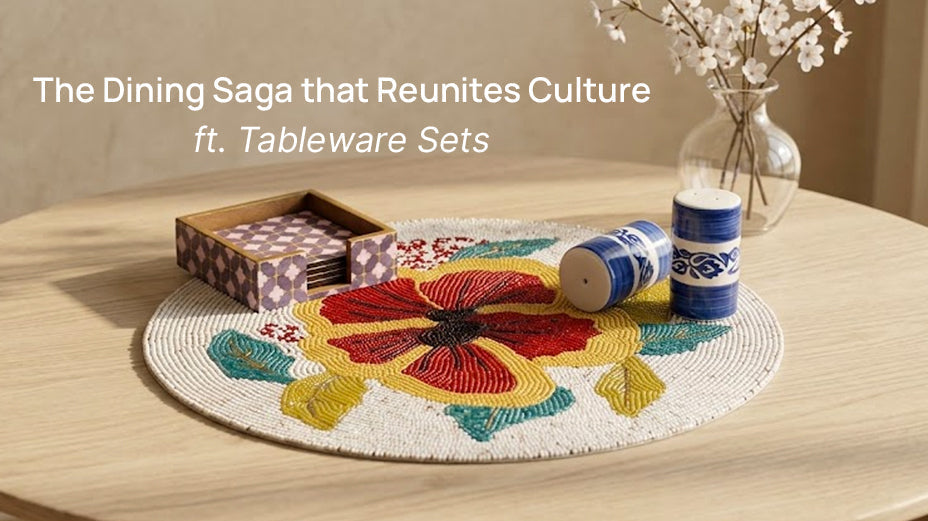
“The very first time I stepped into a dining showroom, I was awed by the dinnerware and its artisanal textures. But one thing that I had to struggle with was which material was which. I mean, it was so confusing- which one was porcelain, which was ceramic?”
- said one of the cooking enthusiasts in her journal.
Though the confusion is valid. Having a lot of varieties in luxury tableware sets materials often confuses buyers, which technically should not find a place in a tableware hotspot. You see, tableware is an extremely personal matter of choices and experiences; hence, it must not be interfered with by a lack of material knowledge.
Thus, we have curated a blog that explains the differences among stoneware materials, so you can focus on material, style, and aesthetics without the chaos. (Plus one, wellness starts with informed choices.)
How Are Most Tableware Sets Made?
Here is its simplest definition…
Basically, every piece of tableware is a high-fired material made from refined natural clay. Fired at temperatures generally ranging between 1,200°C and 1,300°C, it develops a dense, durable body with very low water absorption.
This way, tableware becomes naturally stronger compared to ordinary and mass-produced ceramics during firing without becoming excessively delicate. This unique balance makes it ideal for everyday dining while retaining an artisanal aesthetic.
Today, premium dinnerware sets often include materials like ash-free bone china, ceramic, and porcelain, because they combine functionality with timeless design.
Note: While colours and patterns may change with trends, quality materials remain timeless. That is why understanding the differences between all these materials is essential before choosing a collection.
Why Material Check is More Important Than Design?
You see, we have seen more than hundreds customer stories where the eyes fall for the design the moment they saw a luxury tableware set- way before knowing about its material. But eventually it’s the material only decides everything that matters day to day, how the plate and its texture feels like in your hand, how well it holds heat, whether it scratches easily, is it chip-resistant, and how it ages once it's been through a few hundred wash cycles.
A good pattern on a poor-quality base can start looking tired within a couple of years. A well-made piece in good clay or porcelain plates, on the other hand, can outlast a decade of family dinners without missing a beat. Material also shapes things people don't always think about upfront: how heavy a plate feels, how much upkeep it needs, even how food looks once it's plated.
That's really why the best dining sets rarely rely on flashy decoration to stand out. It's the craftsmanship and the choice of material doing the work underneath.
What are the Different Type of Material Used in Luxury Dinnerware?
No matter whether you go for cutlery sets or drinking glasses, dinner plates or dining sets, every range of dinnerware comes with material variation. Though no material is less or more than the others, each has a unique property that resonates with different expectations.
Here are the top-used materials for dinnerware sets:
Ceramic
The Everyday Classic That Never Goes Out of Style

Ceramic has been a household favourite for centuries, and it's not hard to see why. Made from natural clay and fired at high heat, it manages to be both practical and genuinely good-looking, a combination that's harder to pull off than it sounds.
What people tend to love about modern ceramic dinnerware is exactly what machines can't replicate. Small variations in the glaze, a bit of texture here and there, finishes that feel organic rather than stamped out, it all adds up to pieces that feel like someone actually made them. Nothing about it looks overly polished. It just feels warm and easy to live with.
In a crux-
Ceramic dining sets have-
a) Glazed perfection
b) Warm and comforting texture
c) Not over polished, rather balanced in visual
Porcelain
Refined Simplicity at Its Finest

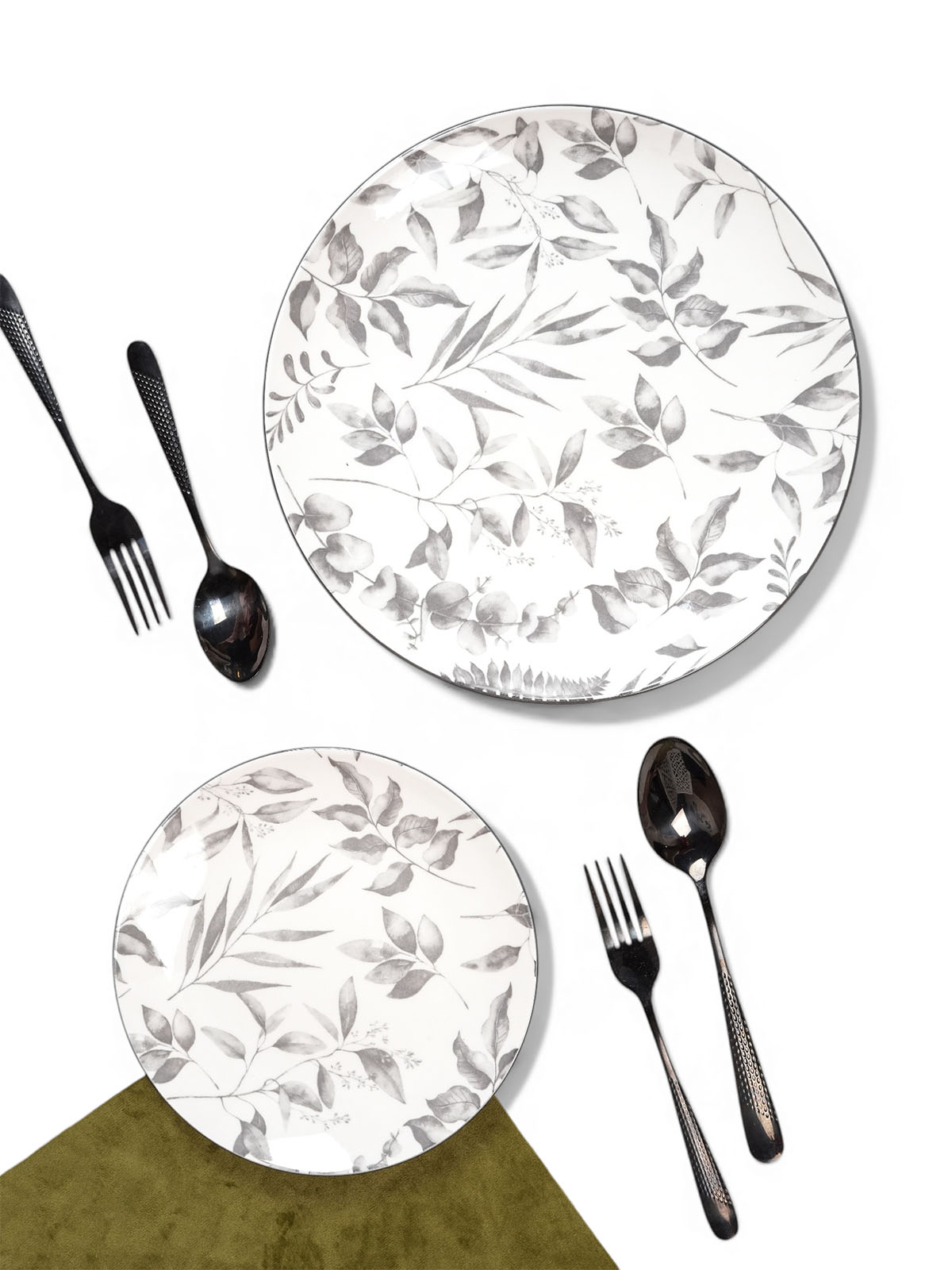
Porcelain is the the introvert cousin in this family. It's made from refined clay, fired at extremely high temperatures, and the result is a smooth, dense surface that looks delicate but is actually surprisingly tough.
But have you ever thought what makes it different from the ceramic? You see, if we compare it to ceramic, porcelain tends to run lighter and thinner, has crisp, clean lines. It also resists stains and moisture well, so it keeps that just-out-of-the-box look for a long time as long as you treat it decently. If you like elegance without a lot of fuss or decoration, porcelain is hard to beat.
In a crux-
Porcelain tableware sets have-
a) Lighter and Thinner Feel
b) Crisp and clear silhouettes
c) Chip, stain, and moisture resistant
Bone China
A Legacy of Fine Dining

Bone china has long been the material people reach for when an occasion calls for something a little more special… think formal dinners and elegant tea services. What surprises a lot of people is that despite looking so delicate, it's genuinely strong. Its composition makes it light in the hand but far from fragile.
It's known for a smooth finish and a faint translucency when you hold it up to the light, the kind of detail that's made it a go-to for weddings, celebrations, and pieces people pass down through the family.
In a crux-
Bone china dinner sets have-
a) Formal and fine dining look
b) Smooth finish and faint translucency
c) Strong and unfragile composition
Did you know?
Initially, it used to be strictly "special occasion only," but better manufacturing has made premium bone china practical enough for regular use too, without losing that exclusive feel.
Ash-Free Bone China
A Contemporary Alternative

As people think more carefully about what goes into the things they buy, the tableware world has adapted too and ash-free bone china is one of the clearest examples. It gives you much of what people love about traditional bone china, minus the animal bone ash.
It's a nice middle ground: elegant, thoughtfully made, and still delivers on durability, a refined finish, and that light-in-hand feel people expect from fine china.
In a crux-
Ash-free bone china sets have-
a) Cruelty-free version of bone china
b) Despite major material elimination, it feels same as traditional bone china
c) Refined finish and light-in-hand feel
Opalware
Designed for Everyday Convenience

Opalware dinner plates have carved out their own niche by simply being easy to live with. Made from tempered glass, they're light, non-porous, and low-maintenance, a solid fit for a busy household that doesn't want to babysit its dinnerware.
Have you seen those dinner sets that have bright white finish providing those clean, modern look that works whether your table is minimalist or full of colour. It doesn't have the same character as ceramic or porcelain, but for anyone who just wants something reliable and good-looking without the extra care, it does the job well.
In a crux-
Opalware luxury tableware sets is
a) Made with tempered glass
b) Light, non-porous, and low-maintenance
c) Supports any dining theme
Final Note
The finest tableware sets do more than hold food, it shapes the vibe of every gathering, setting the mood for the slower conversations. Hence, one should choose tableware sets wisely.
Whether you are drawn to the handcrafted warmth of ceramic dinnerware sets, the refinement of porcelain plates, the heritage of bone china, the innovation of ash-free bone china, or the practicality of opalware plates, each material offers a distinct way to enrich everyday dining.
Choosing the right tableware is ultimately about finding pieces that reflect your lifestyle, complement your home, and make every meal feel considered. At Kairaus, you can get tableware collection, from ceramic handled cutlery to ash-free bone china cups and mugs, to french-themed plates. Explore the collection now!
Frequently Asked Questions:
Which material is best for everyday tableware sets?
High-quality ceramic is a popular choice for daily use because it balances durability, aesthetics, and versatility.
Is porcelain better than ceramic?
Neither is universally better. Porcelain offers refined elegance and a lighter feel, while ceramic provides warmth, durability, and artisanal character.
What is ash-free bone china?
Ash-free bone china is a modern alternative to traditional bone china that delivers similar strength and elegance without using animal bone ash.
What should a complete tableware set include?
A complete collection typically features dinner plates, bowls, ceramic platters, cups and mugs, cutlery, and complementary serving accessories for a cohesive dining experience.
Where can I find quality dinnerware sets?
You can find quality as well as artisanal dinnerware sets at Kairaus. A brand that brings people together through accents made intentionally.