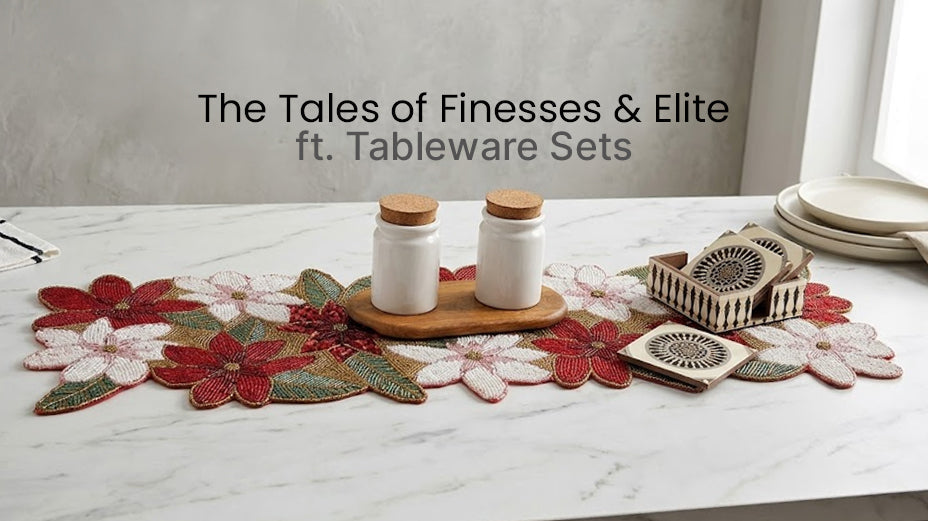
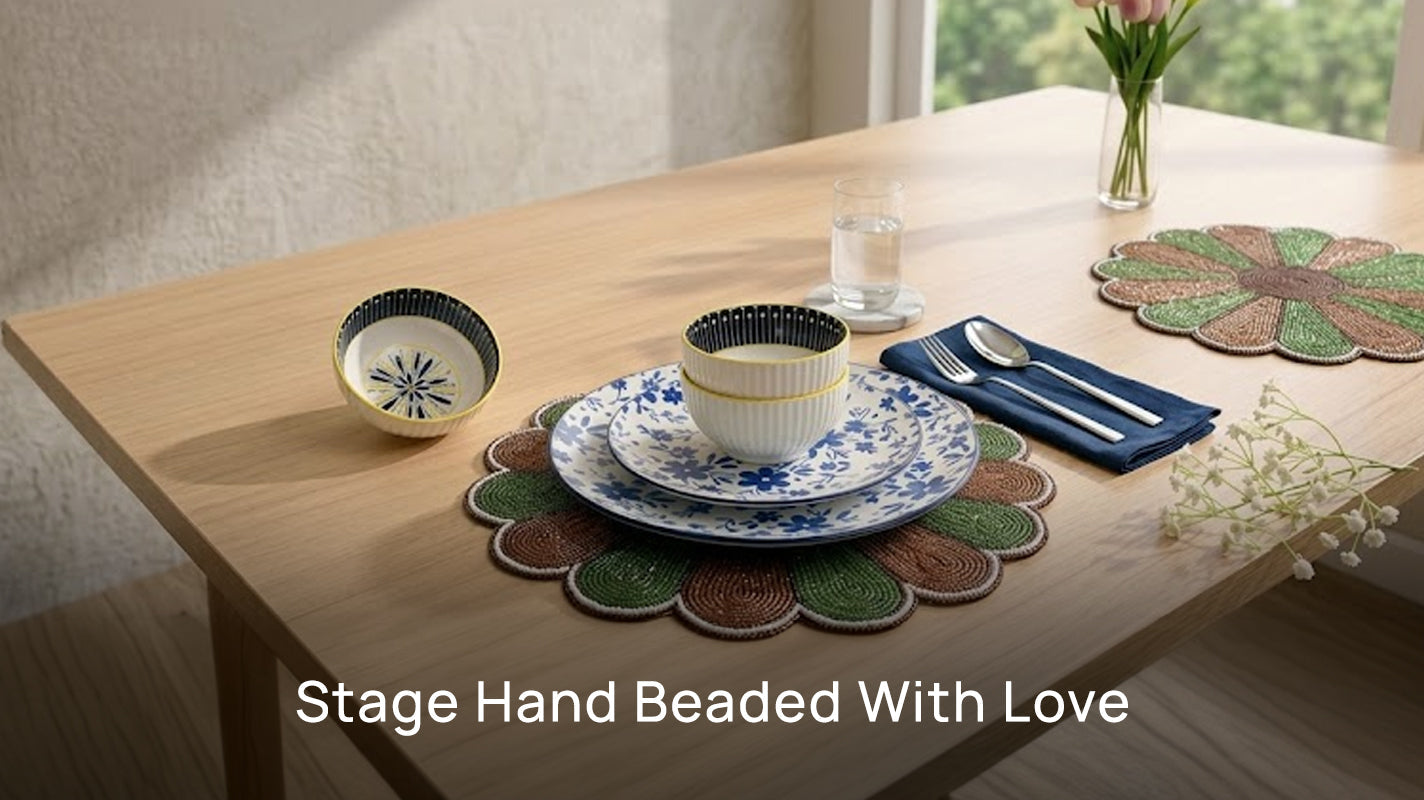
Before electricity, before restaurants, before Instagram, there were humans fond of being gathered around a table. Not for food but for each other. Every civilisation on earth, no matter how different, built rituals around the act of sharing a meal. The place or grandeur was never just furniture. It was always a single table where love was declared, grief was shared, strangers became family.
Here's a question- What do the world's greatest dining traditions have in common and what can they teach us about the tables we build today? If you want to know about it, this written piece is for you.
Every culture on this planet, no matter how different its language or the aesthetics, has created their rituals around the shared meal. And if you look closely at those rituals, all of them are really closely knitted. If you start to notice they were never about the food. They were always about the people. The warmth and the love that sparkled with luxury tableware sets.
Here is what five of the world's greatest dining traditions have quietly been trying to tell us.
Japan: When Every Detail Says "You Matter"

Ma, a concept of Japanese dining, which loosely translates to the beauty of what is left intentionally empty. A single ceramic bowls. A serving trays with nothing unnecessary on it. In designing and decor world it can be perceived as ‘Space that breathes.’
But here is the part that gets overlooked: that restraint (calm/संयम) is not minimalism for aesthetics rather its a form of respect and efforts for honouring the positive atmosphere.
When a Japanese host places a single cup or luxury tableware set in front of you perceive it as something chosen carefully, positioned just so apt like they are saying something without words. I thought about you.
Before eating, there is itadakimasu... an intentional pause where everyone at the table acknowledges the meal together. A recognition that this moment belongs to all of us.
What does it teach us?
Slow down at the dining table and make every moment intentional. When you choose pieces that are handcrafted and considered, a ceramic condiment set, a hand-beaded table linen that feels like it belongs exactly where it sits, you are doing the same thing a Japanese host has always done.
Telling your guests, without saying a word, that they were worth the thought.
India: The Table That Was Built to Overflow

Indian luxury dining was never designed for one. The thali... a large plate with everything arranged around it, is not just a way of serving food. It is a philosophy. Everything knitted together with tableware sets. Nothing held back.
Festivals like Diwali or Eid do not happen around small tables. The table glows with luxury dining sets. Neighbours come. Cousins arrive unannounced. Someone always pulls up a tissue from wooden tissue holder. And somehow, there is always enough because an Indian kitchen operates on the belief that abundance is meant to be shared, not protected.
There is a phrase for it: Atithi Devo Bhava. The guest is God. Not a polite saying but an actual practice. The best of what you have goes to whoever walks through the door.
What does it teach us?
A beautiful table is not a table for show. It is a table for giving. The handmade table linen, the pieces that look too good to use and use them. Use them for the Tuesday dinner. For the day when your mother visits without warning.
France: Tuesday Deserves to Be Beautiful Too

The French did not invent fine dining, Period. They discovered the idea that every meal deserves to be treated as fine.
Le repas, the French meal... is preserved time. You do not eat standing at a counter pr while scrolling through your phone between bites. You sit, you pour, you talk, you stay. A French family dinner on an ordinary Wednesday evening looks, from the outside, like a celebration with luxury dining sets, wooden coasters, and other tableware sets. Because to them, it is one.
The table is set before anyone arrives. Table Linen is smoothed and a handmade coaster is placed. A small condiment dish sits at the centre not because it needs to, but because it signals something important: I prepared this for you before you got here.
What does it teach us?
The accessories on your table are not decoration. They are a message. A wooden coasters, a tissue holder chosen with care, a placemat that did not come in a plastic pack of twelve but these are the things that turn a meal into a memory.
Morocco: No One Sits at This Table Alone

In Morocco, the mint tea ceremony is not a just drink. The tea is poured from a height... slowly, deliberately and served to everyone present before a single person sips. You wait. Together. That waiting is the whole point.
Moroccan tables are low, this can be understood as you go through the seating that pulls everyone inward, toward each other. Food comes in shared taglines and the dishes that physically cannot be eaten alone. Even the architecture of the meal is designed to create closeness with tableware sets and other dining accents.
What does it teach us?
The most poise thing a table can offer is not what is on it but it is the feeling that you belong there. Gold (plated) pieces, warm condiment sets, objects that catch the light and make a table feel inviting and they do what a Moroccan host has always done instinctively. They say: come in, sit down, you are welcome here.
Italy: The Table You Never Want to Leave

The Italian Sunday lunch does not end. It slows, it drifts, it turns into coffee, then into someone telling a story, then into more wine, then into a debate about something no one will remember by Monday. And that is entirely the intention.
Interestingly, the most beautiful thing about this culture’s dining is that it is made to bring multiple generations around one table. The grandmother who made the pasta. The child who keeps escaping under it. The uncle who is always slightly too loud. All of it held together by the table and luxury tableware sets itself as the table linen, the ceramic platters passed back and forth, the ritual of a meal that refuses to be rushed.
In Italy, a beautiful table is not a luxury. It is a responsibility. It is how you tell the people you love that their time here matters.
What does it teach us?
The table is only as good as what happens around it. But the right pieces like luxury dining sets, table linen that feels considered, platters that invite passing, mats that make the space feel complete, those are what make people want to stay a little longer.
Final Note
Japan, India, France, Morocco, Italy...all are completely different in every possible way. But every single one of them understood something that is inevitable yet easy to forget in the hustle and bustle era. The table is not about food. It never was.
It is the place where people come closer. Where strangers relax into friends. Where family remembers why it is family. The care you put into setting it like the pieces you choose, the thought behind them and that care is felt by everyone who sits down.
That is what tableware sets like condiment sets, table linen, handmade wooden coasters, etc. are really for. Not to impress. To connect.
If you want to build a table like that, explore Kairaus’ exquisite and artisanal luxury tableware sets collection handcrafted pieces made for the moments that actually matter.
Frequently Asked Questions:
What dining accents come in tableware set category?
Tableware sets typically include table linens, coasters, tissue holders, condiment sets, and table linen and everything that dresses your table beautifully.
Are wooden tableware sets worth buying?
Absolutely. Wooden pieces like wooden tissue holder, trays, and coasters, age beautifully, last for years, and bring a warmth to your table that no synthetic material ever quite matches.
What are some maintenance tips for ceramic condiment sets?
Hand wash gently, avoid sudden temperature shifts, dry thoroughly before storing, and never stack without padding as ceramic rewards the people who care for it.
Where can we find best luxury tableware sets?
Kairaus offers handcrafted luxury tableware sets online that are thoughtfully designed pieces crafted to bring real warmth and intention to every table they sit on.